Dashboards are overflowing. CTRs, MQLs, impressions, bounce rates—you name it. Every campaign adds more metrics, but not always more meaning. As marketing teams navigate tighter budgets, evolving tools, and shrinking attention spans, the real question isn’t “Are we measuring enough?” but “Are we measuring what matters?”
It’s time to admit that many traditional KPIs were built for a simpler time. But before we toss them out, let’s separate what’s still useful from what’s become noise.
Traditional KPIs still have value—if they connect to outcomes
Classic metrics like customer acquisition cost (CAC), conversion rate, and marketing-attributed revenue still have a place when they directly link to business growth.
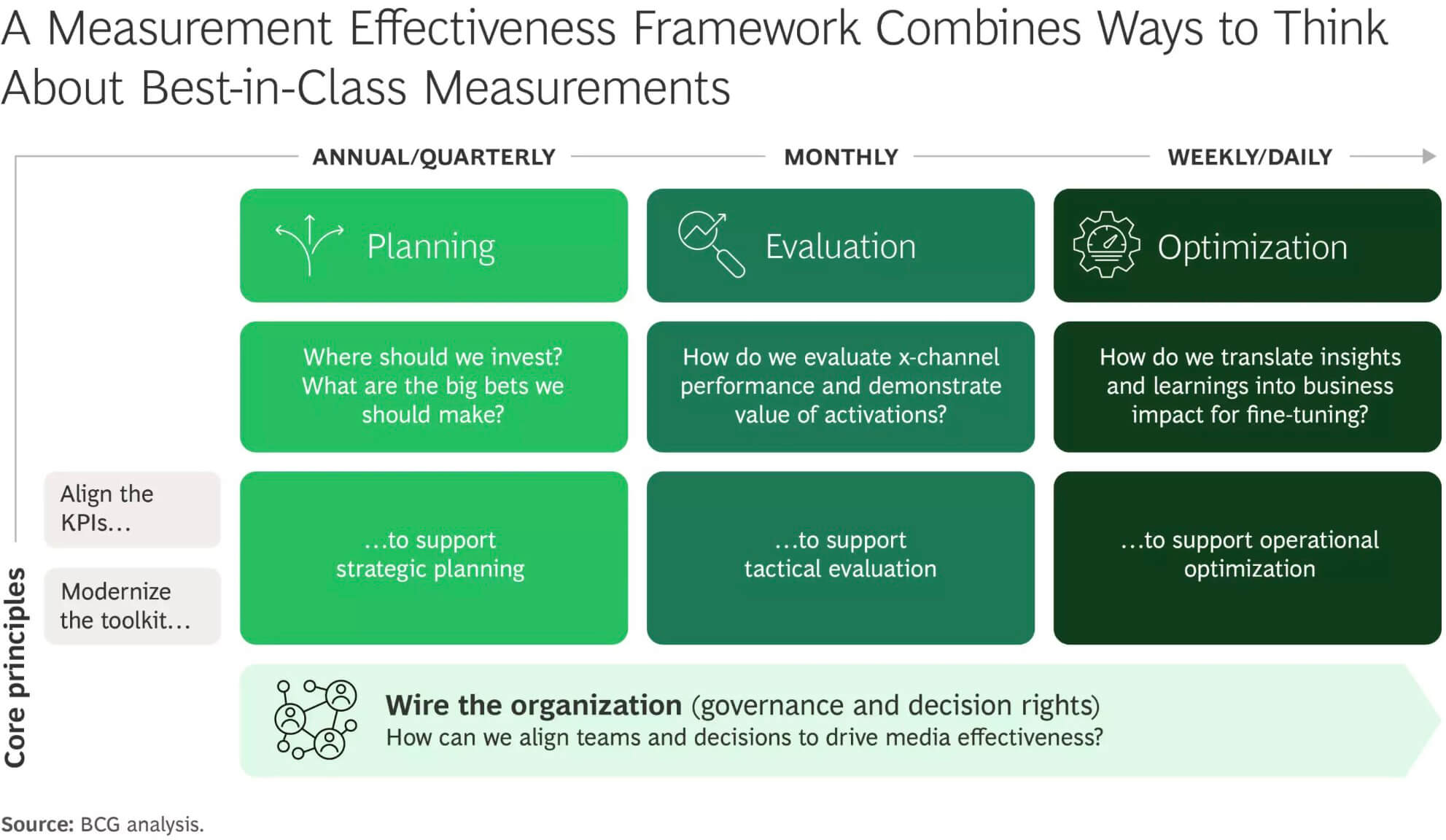
According to a recent Boston Consulting Group (BCG) study, marketers who align their KPIs with clear business outcomes and build integrated measurement frameworks deliver up to 70% higher revenue growth than their peers. These aren’t just “marketing numbers,” they’re performance indicators that leadership understands and invests behind.
The takeaway: Traditional KPIs still matter when they help connect marketing activity to business impact.
But the world has changed—and your KPIs should too
Today’s marketing landscape is fragmented and fast-moving. “Vanity” metrics like raw impressions or post frequency tell us little about resonance or impact. The focus has shifted toward signals of engagement, trust, and long-term value.
A few examples:
- Instead of tracking page views, look at engaged sessions (visits with meaningful interaction)
- Swap email sends for qualified responses or content-assisted conversions
- Track customer lifetime value alongside cost to retain to balance efficiency with loyalty
The goal isn’t to measure more, it’s to measure better.
Ok, so what’s worth measuring now?
The best modern KPI frameworks share a few common threads:
- They tie directly to outcomes. Every metric should roll up to revenue, retention, or reputation
- They measure depth, not just reach. Track how people move through your ecosystem—who engages, who acts, and who advocates
- They balance short-term and long-term value. Pair immediate results (e.g., conversions) with long-view indicators (e.g., brand sentiment, customer trust)
In short: data should tell a story—not just fill a spreadsheet.
What to stop obsessing over?
Some old habits need breaking when they just reward activity instead of actual progress like counting posts, emails, or clicks as proof of productivity, reporting on reach without relevance or treating traffic as success without knowing intent or conversion.
A modern approach to measurement
Here’s how forward-thinking teams are reframing their KPI strategy:
- Start with business goals. Define what success really means—growth, retention, advocacy.
- Choose your North Star. Pick one or two metrics that reflect your mission (e.g., revenue influenced, cost to retain).
- Add supporting metrics that ladder up. Include engagement, awareness, and conversion measures that tell the fuller story.
- Balance performance with brand health. BCG’s research shows top marketers measure both simultaneously.
- Review and adapt quarterly. Measurement should evolve alongside your audience and tech stack.
The smarter way forward (and what MKT1 gets right)
Emily Kramer and the team at MKT1 —a leading marketing advisory group—summarizes this perfectly: “KPIs alone don’t make a marketing plan.” Great marketers pair KPI goals with project and operational goals—the work that actually builds future performance. In other words, it’s not just what you measure, it’s what you do about it.
The bottom line
Traditional KPIs aren’t dead—they’ve just outgrown their old job descriptions. The marketers who win in 2026 will stop chasing dashboards and start measuring what matters: outcomes, relationships, and resonance.
Because in a world overflowing with data, your real advantage isn’t the amount you track—it’s the clarity of what you choose to measure.
Written by

Lauren Burns
Bringing over two decades of strategic communications leadership expertise from Fortune 100 companies and top-tier agencies, Lauren is dedicated to catalyzing positive change within the thriving climate tech sector. Serving as principal for all client efforts, Lauren leverages her extensive knowledge and business acumen to help propel the next-generation of innovative thinking into impactful brands that have the power to scale and effect positive change. As a mother to two young girls, Lauren strives to leverage her work to instill values of sustainability and possibility to those she hopes to influence most. Outside of work, Lauren digs all the time she can get with her family whether it’s cooking, skiing or a hike with their Bernese Mountain Dog, Winnie.